
Filters & pumps
Haboobs, dust and your pool: why the filter schedule changes in the East Valley
Dust storms, nearby construction, empty dirt lots and unfinished yards load a pool filter much faster than a standard schedule assumes. How to clean up after a storm, how to read your filter's pressure gauge, and when to call for help.
$120 diagnostic, credited toward your repair · set pricing on many common repairs and installations
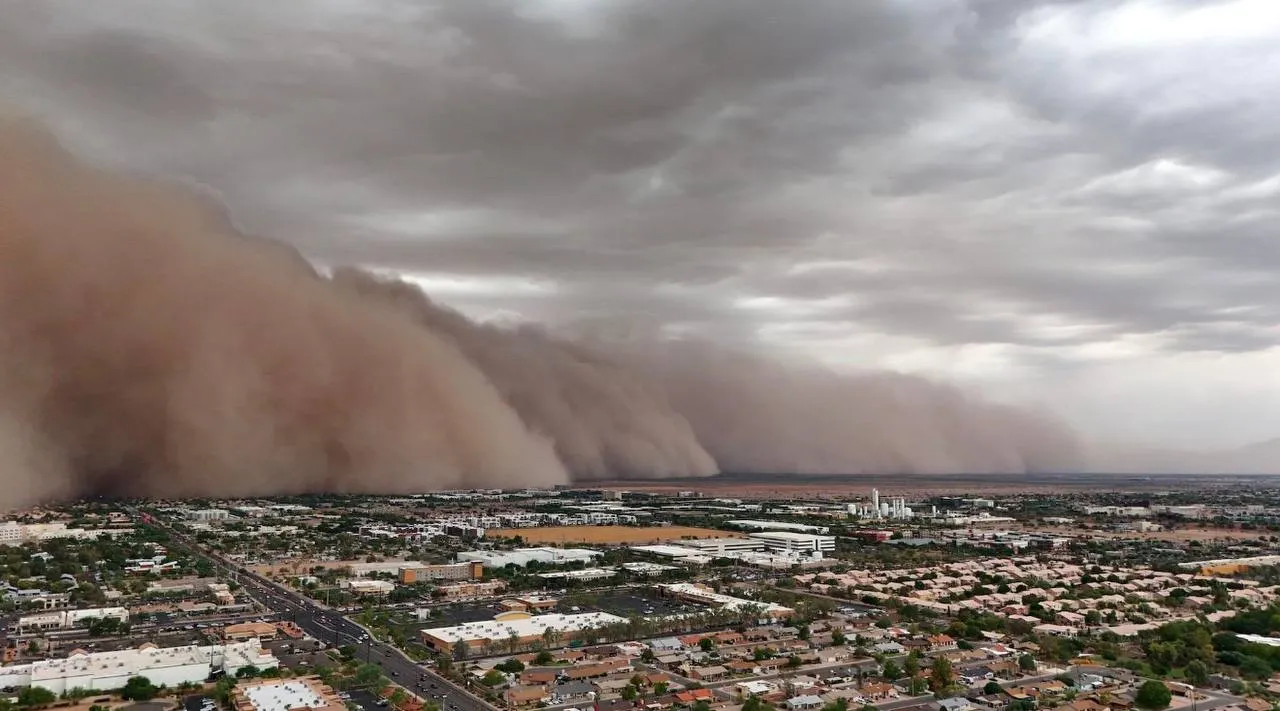
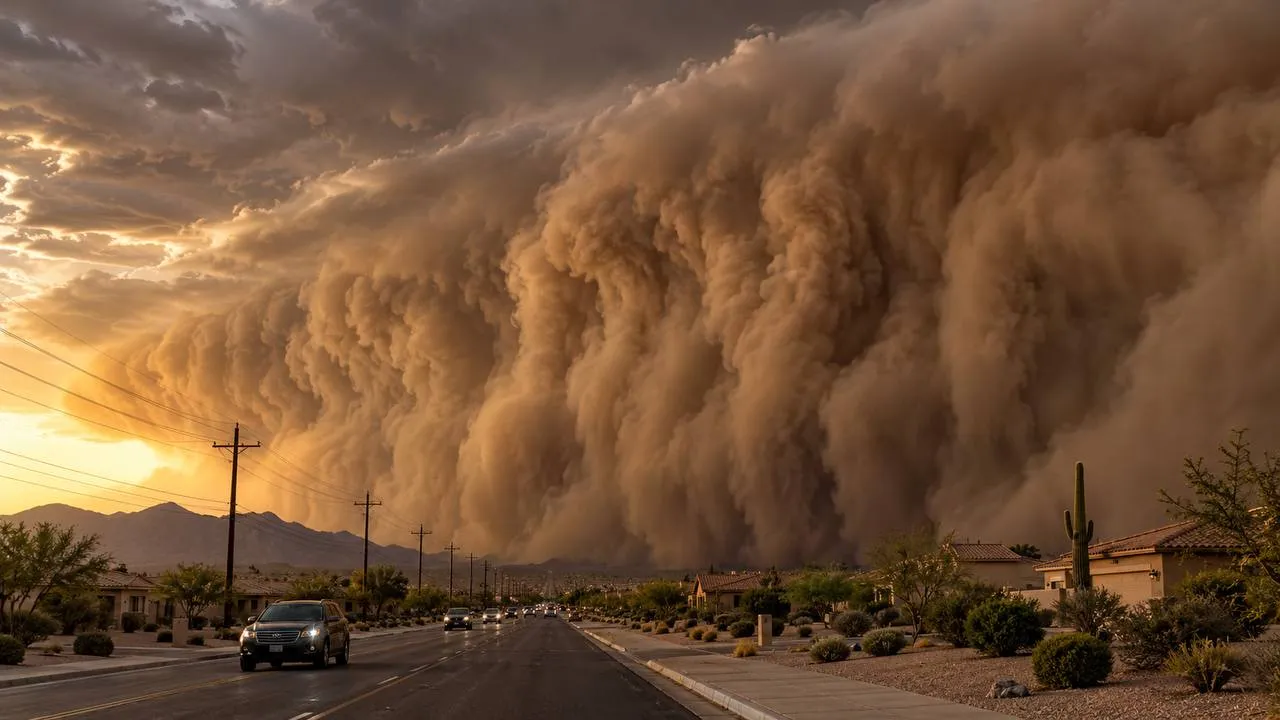
If you live in Queen Creek, San Tan Valley, Florence or Anthem at Merrill Ranch, you've seen it coming: a brown wall rolling across the desert on a summer evening. A few hours later the pool is cloudy, the skimmer basket is full and there's a film of dust on the deck. Mesa, Gilbert and Chandler see the same storms, and around the East Valley they come on top of everyday dust from new construction, bare lots and yards that haven't been landscaped yet.
That dirt goes somewhere, and most of it ends up in your filter. This is why the maintenance schedule that works for one pool can be badly wrong for the pool down the street.
What a haboob does to a pool
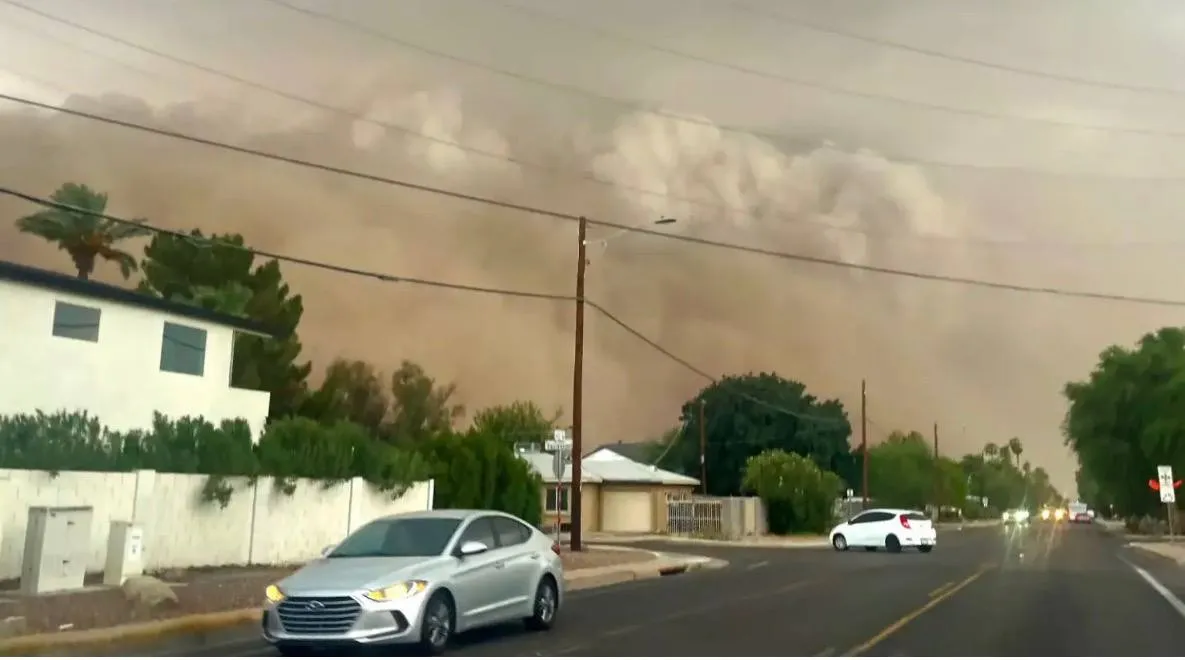
NOAA describes haboobs as very strong dust and sand storms in hot, dry regions. They form when air is forced down and pushed forward by the front of a moving thunderstorm. NOAA says the winds can reach 60 mph and raise a wall of dust as high as 10,000 feet, and that one to three large dust storms reach the Phoenix area in a typical year (NOAA). They come with the summer monsoon. The National Weather Service's Phoenix office reviews each June-to-September season, including dust storms that dropped visibility to a quarter mile or less across the metro area (NWS Phoenix).
A pool in the path of one of these storms gets hit with:
- Fine dust. It hangs in the water and turns it cloudy, then gets pulled into the filter.
- Heavier dirt and sand. It settles on the floor and steps.
- Leaves, weeds and debris. They clog the skimmer and pump baskets.
- Everything the dirt brings with it. That material uses up sanitizer.
The storm is over in an hour. The cleanup, and the load on your filter, can last for days.
It isn't only storms
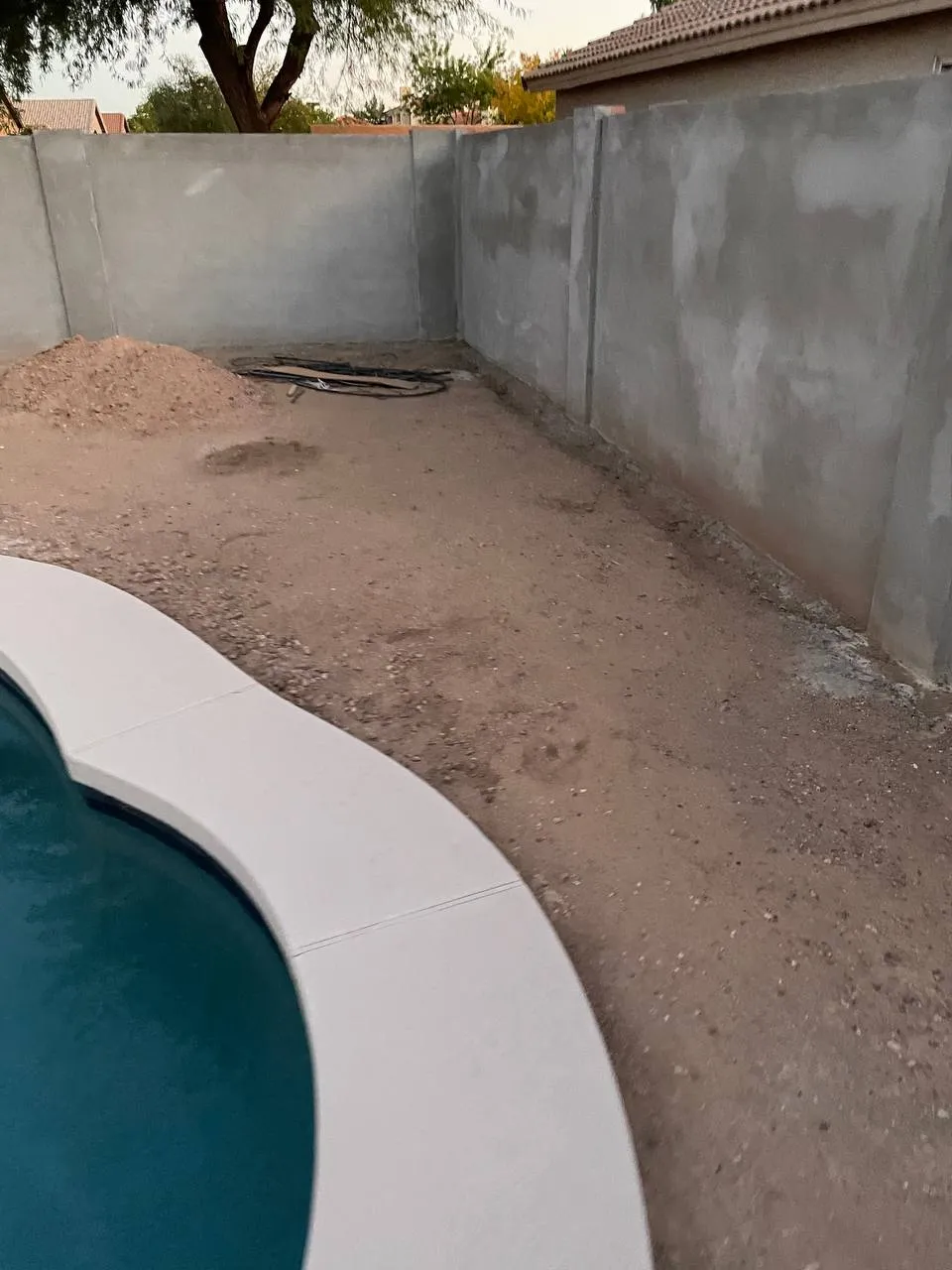
Big storms get the attention, but in fast-growing parts of the East Valley the dust never really stops. Pools near any of these load their filters faster all year:
- Active construction. New homes, roads and commercial sites stir up dirt every working day. Much of San Tan Valley, Queen Creek, Florence and Anthem at Merrill Ranch is still being built.
- Empty dirt lots and open desert. Any afternoon breeze picks up loose soil and carries it into the neighborhood.
- Unfinished landscaping. Bare dirt in your own backyard, or the neighbor's, is the closest source of all. It's the first thing the wind reaches before your pool.
A pool next to a bare lot on the edge of a new subdivision and a pool in a mature, fully landscaped neighborhood can need very different care, even in the same city.
The big point: standard schedules don't fit every pool
You'll often hear that a cartridge filter needs cleaning once or twice a year. That might be true for some pools. But a filter that would go six months between cleanings in a quiet, established neighborhood might need cleaning every three months, every month or after every storm if it sits downwind of construction or open dirt.
Don't go by the calendar. Go by the pressure gauge on top of your filter. It tells you how hard the filter is working, and it's the most reliable way to know when your pool needs attention.
How to use your filter pressure gauge
Find your clean baseline. Right after a filter clean, or with new cartridges, run the pump at its normal speed and write down the gauge reading. Hayward and Pentair both build their cleaning instructions around this number. Hayward calls it the starting or pre-coat pressure, and Pentair calls it the "Original Starting Pressure" (Hayward Pro-Grid manual, p. 6; Pentair Clean & Clear Plus guide). Write it on a label or piece of tape on the filter.
Check the gauge regularly. Compare readings at the same pump speed. On a variable-speed pump, a different speed gives a different reading.
Clean at 8 to 10 PSI over your starting pressure. That's the rule we go by, and it matches the manufacturers:
- Hayward's Pro-Grid D.E. manual says to backwash when the pressure rises 8 to 10 psi above the pre-coat pressure (Hayward, p. 6).
- Pentair's Clean & Clear Plus and Quad D.E. guides say to clean or backwash at about 10 psi above the original starting pressure, or when flow drops noticeably (Pentair).
- Some cartridge filters call for cleaning sooner. Hayward's XStream manual says cleaning is needed when the gauge rises 5 to 7 PSI above normal (Hayward XStream manual, p. 6).
Follow the number in your own filter's manual. If you don't have the manual, the model number is on the filter's label, and most manufacturers post manuals online. Our Parts Finder can help you identify the model.
Check the reading after cleaning. If the pressure doesn't come back down close to your baseline after a cleaning, the cartridges may be worn out. Hayward's SwimClear manual says that if a cleaned filter starts more than 6 PSI above the pressure it had with new cartridges, the cartridges should be replaced at the next cleaning (Hayward SwimClear manual, p. 6).
After a big storm, check the gauge the next day and again a few days later. It's common for a filter to climb several PSI after one dusty evening.
Backwashing (sand and D.E. filters)
If you have a sand or D.E. filter with a backwash valve, backwashing is the cleaning step. Follow your manual for valve positions and run times, and turn the pump off before you move the valve. A D.E. filter needs fresh D.E. added after a backwash, as its manual describes. Check your city's rules on where backwash water can go.
Cartridge filters don't backwash. The cartridges come out and get hosed off, and they're replaced when they no longer clean up.
After a dust storm: a step-by-step cleanup
- Empty the skimmer and pump baskets first. Turn the pump off before you open the pump basket. A packed basket starves the pump of water.
- Skim off the floating debris. Get leaves and weeds out before they sink and break down.
- Brush the walls, steps and floor. Brushing lifts settled dust so the filter can catch it, or gathers it so you can vacuum it.
- Vacuum heavy dirt. Thick sand and mud on the floor is often better vacuumed. If you have a valve set up to send vacuumed water out of the pool instead of through the filter, use it for heavy dirt, so the filter isn't overwhelmed. Your pool's setup and city rules decide whether that's an option.
- Run the pump longer. For the next day or two, give the system extra runtime to clear the cloudy water. On a variable-speed pump, a higher speed for part of the day helps the skimmers pull in surface debris.
- Watch the pressure gauge. If it climbs to your cleaning point, clean or backwash the filter. After a bad storm that might happen within days, not months.
- Test the water and adjust. Dust and debris use up sanitizer. Test, then adjust using your test kit and the product's label directions, instead of adding chemicals by guesswork.
Common mistakes after a dust storm
- Running the pump with packed baskets. The pump can't move water it can't get. Running it short of water can damage the pump. Our guide on a pump that's running but not moving water covers what to check.
- Cleaning on a calendar instead of by the gauge. You'll clean too often in a quiet year and too late after a dusty one.
- Never recording a baseline. Without it, a gauge reading tells you very little.
- Pouring in chemicals before removing the dirt. Brush and vacuum first, then test.
- Ignoring pressure that drops after a storm. Pressure that falls below your baseline usually means water isn't getting to the filter. A clogged basket, a blocked line or an air leak are common causes. See filter pressure too low.
- Skipping the gauge itself. Old gauges stick. If the needle never moves, the gauge may need replacing before you can trust it.
How landscaping cuts down on blowing dirt
The less bare soil there is around your pool, the less dirt the wind has to carry in. If your yard is new or unfinished, these help:
- Cover bare ground. Decomposed granite, rock or pavers keep loose soil from blowing.
- Plant a windbreak. Shrubs and low walls on the side storms usually come from catch dust before it reaches the water.
- Keep debris-heavy plants back from the pool. Plants that drop a lot of leaves or seed pods end up in the skimmer.
- Keep the wind's path in mind. Summer storms often arrive from the same direction. Note which side of the yard gets hit hardest and start there.
A finished yard won't stop a haboob, but it can make a big difference to how much dirt blows in on an ordinary windy day.
When to call for help
Most dust cleanup is yours to do, and we'd rather tell you that than sell you a visit. Call us when:
- The filter pressure won't come down after a thorough cleaning, or shoots back up within a few days. See pool filter pressure too high to tell which.
- The pump is losing prime, making noise or not moving water after a storm. See pool pump losing prime.
- The filter is leaking, cracked or the lid won't seal, or you're not comfortable taking it apart.
- You'd rather not deal with it. Filter cleaning is one of our set-price jobs.
We handle pool filter repair and cleaning, pool pump repair, variable-speed pumps and the rest of the equipment pad, on site. We serve Queen Creek, San Tan Valley, Florence, Anthem at Merrill Ranch, Gilbert, Chandler, Mesa and the rest of the East Valley.
Not sure what's wrong after a storm? The Pool Problem Finder starts from what your equipment is doing. Or call or text a photo of your filter's pressure gauge and the equipment pad, and we'll tell you what we see.
Questions
How often should I clean my pool filter in Arizona?
There isn't one schedule that fits every pool. A filter that does fine on a cleaning every six months in a quiet, finished neighborhood may need it every three months, every month, or after every storm next to a construction site or open dirt lot. Let the pressure gauge decide. Record the pressure with a clean filter, then clean it when the gauge climbs to the point your filter's manual gives.
At what pressure should I clean my pool filter?
Clean it when the gauge reads 8 to 10 PSI over your starting pressure, the reading with a clean filter. That's the rule we use, and it's what Hayward's Pro-Grid D.E. manual says (8 to 10 psi). Pentair's Clean & Clear Plus and Quad D.E. guides say about 10 psi. Always measure from your own starting pressure, not a fixed number. A few cartridge filters call for cleaning sooner, so check your filter's manual.
Should I run my pool pump during a dust storm?
Many homeowners turn the pump off while the storm passes so the skimmer doesn't pull in a slug of debris, then empty the baskets and run it longer afterward. What matters most is that the baskets are clear before the pump runs again. A pump running against a packed basket or a clogged filter isn't moving much water, and running it that way works it harder.
Why does my filter pressure go right back up after I clean it?
If a pressure that comes down after cleaning climbs back within days, the filter is either catching an unusual amount of dirt or something else is wrong. That could be worn cartridges, a torn D.E. grid or sand that needs attention. Our filter pressure guide walks through how to tell which.
Will dust affect my pool chemistry?
Dust and debris add a lot of material for the sanitizer to deal with. Test the water after a storm rather than guessing, and adjust using your test kit and the directions on the product label. Brushing and vacuuming the dirt out first makes the chemicals' job easier.
Can you clean my filter for me?
Yes. Filter cleaning is one of our set-price jobs, and we serve Queen Creek, San Tan Valley, Florence, Anthem at Merrill Ranch, Gilbert, Chandler, Mesa and the rest of the East Valley. If the pump or filter isn't acting right after a storm, we can find out why.
Sources
- Haboobs: Phenomena with the unusual name is no joke, NOAA, web page (accessed 2026-10-22)
- 2023 Monsoon Season Review - Phoenix, National Weather Service, Phoenix, web page (accessed 2026-10-22)
- Pro-Grid Vertical D.E. Filter Owner's Manual, Hayward Industries, Inc., 6 (pre-coat pressure; backwash at 8-10 psi above it) (accessed 2026-10-22)
- XStream Cartridge Filter Owner's Manual, Hayward Industries, Inc., 6 (clean when the gauge rises 5-7 PSI above normal) (accessed 2026-10-22)
- SwimClear Owner's Manual, Models C2030-C7030, Hayward Industries, Inc., 6 (record the starting pressure; replace elements when clean pressure stays more than 6 PSI above it) (accessed 2026-10-22)
- Clean & Clear Plus Installation and User's Guide (2025), Pentair, PDF p. 5 (clean at about 10 psi above the original starting pressure) (accessed 2026-10-22)
- Quad D.E. Installation and User's Guide, Pentair, PDF p. 12 (backwash at about 10 psi above the original starting pressure) (accessed 2026-10-22)