
Pool Equipment Replacement & Upgrades
Pool equipment replacement and upgrades
Whether something is worth repairing again is a question about what is left in it — not about what today's repair costs. We would rather answer that honestly than sell you the repair.
Upfront pricing · many common repairs and installations have a set price, given before any work starts
What this covers
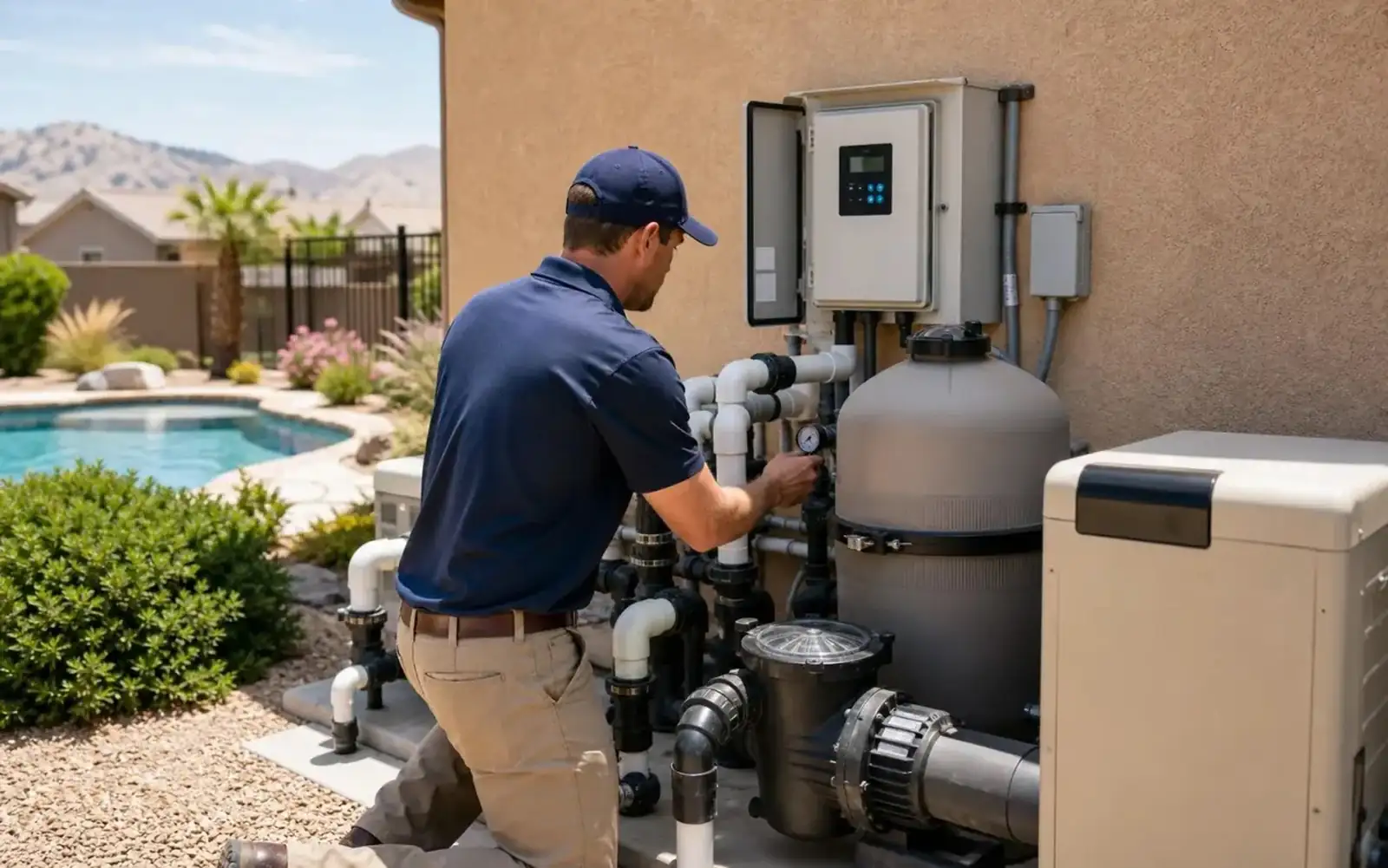
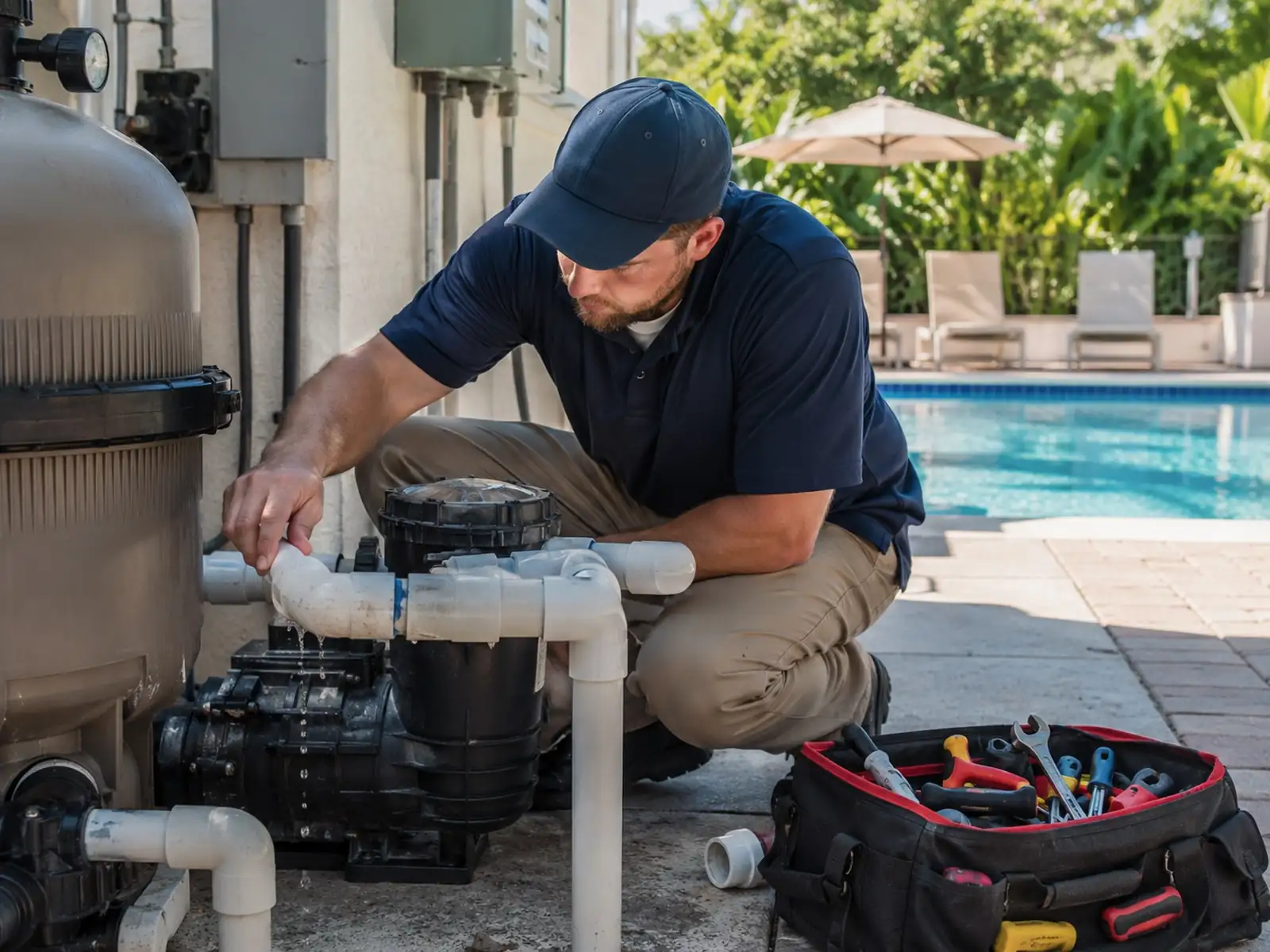
Replacing equipment that has reached the end of its life rather than repairing it again, and planned upgrades on equipment that still works. Pumps, filters, heaters, heat pumps, salt systems, automation, valves and lights.
Also new-equipment evaluations — looking at a pad and telling you what condition it is actually in, which is worth doing before a failure rather than after one.
The decision, stated honestly
Most replacement conversations start with a repair quote and the question "is it worth it?".
That question is not really about the price of the repair. It is about what is left in the unit. The things that actually decide it:
- What failed. A wear part is different from a structural failure. A pump seal is not a cracked housing; a heater igniter is not a corroded heat exchanger.
- What has already been replaced. One repair on a mid-life unit is maintenance. A third repair, each on a different part, is a pattern.
- What is likely next. If the same unit has two other components visibly near the end, fixing one buys less than it appears to.
- Whether parts still exist. On discontinued equipment this sometimes settles the question by itself, regardless of what anyone would prefer.
We will give you our reading of those. It is a judgement, and we will say so rather than dress it up as arithmetic.
Upgrades that are usually worth it
Not everything is, so this list is short on purpose:
- Single-speed to variable-speed pump. The clearest one. Most of the saving comes from being able to run slowly for longer rather than fast for less time.
- Incandescent to LED lighting. Lower draw and a much longer lamp life.
- Adding automation where the pad already has the equipment to control but nothing controlling it.
- Correcting equipment that was undersized when it was installed — a filter or salt system too small for the pool has been working too hard its whole life.
Upgrades that often aren't
- Replacing equipment that is working because newer exists.
- Oversizing a heater or pump on the assumption that bigger is better. Both perform worse oversized, and a heater larger than the gas supply can feed performs worse than the correct one.
- Replacing a full pad when one unit failed, unless the rest is genuinely at the same point.
What an evaluation involves
We look at what is on the pad, how old it is, what has been done to it, and how it is plumbed and wired together. Then you get a plain description of its condition and what we would expect to need attention first.
That is useful before you are forced into a decision, which is the point of doing it while everything still runs.
Sizing and compatibility
New equipment has to fit the plumbing it joins, the electrical supply available, and the rest of the system it will work alongside. Those constraints usually narrow the sensible options before preference does — which is why installation starts with looking at the pad.
Where equipment shares a control system, compatibility is a real limit and we check it rather than assume it.
Warranty service
We perform warranty service on equipment where the manufacturer's process provides for it. What is covered, for how long, and under what conditions is set by the manufacturer, not by us — so we will not describe warranty terms on this page. We will tell you what applies to your specific unit once we know what it is.
Pool school
When new equipment goes in, we will walk you through operating it — what the controls do, what normal looks like, what to watch for, and what the readings on your pad mean for your pool specifically.
Knowing your own filter's clean pressure, for one example, turns a gauge from decoration into the most useful diagnostic on the pad. That is worth twenty minutes at handover.
Set prices
- Pump installation$225 labor
- Filter installation$225 labor
Labor prices don’t include the pump, filter or parts, which are quoted with the job. You hear the full price before any work starts. Not sure what’s wrong? That’s the $120 diagnostic, credited toward your repair if you go ahead.
Why homeowners call us
You approve the price first
Whether we are diagnosing a fault or doing a job you already know you need, you hear the price before any work starts. Nothing is replaced until you have approved it.
Pool equipment is all we work on
Pumps, motors, filters, salt systems, automation and the plumbing at the pad. The technician who diagnoses it is the one who fixes it.
Upfront pricing
Already know what you need? Many common repairs and equipment installations have a set price, and you hear it before any work starts. The $120 diagnostic doesn't automatically apply to those jobs.
Questions we get asked
How do I know whether to repair or replace?
Three things decide it — how old the unit is, what has already been replaced on it, and what is likely to go next. A first failure on a mid-life pump is worth repairing. A third failure on an old one, where each repair has been a different part, is usually the unit telling you something. We will tell you which pattern yours fits.
Do I have to replace everything at once?
No, and usually you shouldn't. Equipment installed at the same time does tend to reach the end at similar times, so it's worth knowing what else is close — but knowing is different from replacing. Sequencing it is a legitimate choice and we will help you plan it.
Will a new pump save me money?
A variable-speed pump replacing an old single-speed usually reduces running cost meaningfully, because most of the saving comes from running slower for longer rather than from the motor itself. How much depends on your rates and your run time, so we won't put a number on this page that we can't stand behind for your pool.
Can you match what I already have?
Often, and where the rest of the pad is one manufacturer's system there are good reasons to. Where it isn't, compatibility is a real constraint we check rather than assume.
Tell us what it’s doing.
A few questions is usually enough to tell a five-minute fix from a real repair.