
Mesa, Arizona
Pool equipment repair in Mesa
We come to your equipment pad in Mesa, find out what has actually failed, and tell you before anything is replaced.
$120 diagnostic, credited toward your repair · set pricing on many common repairs and installations
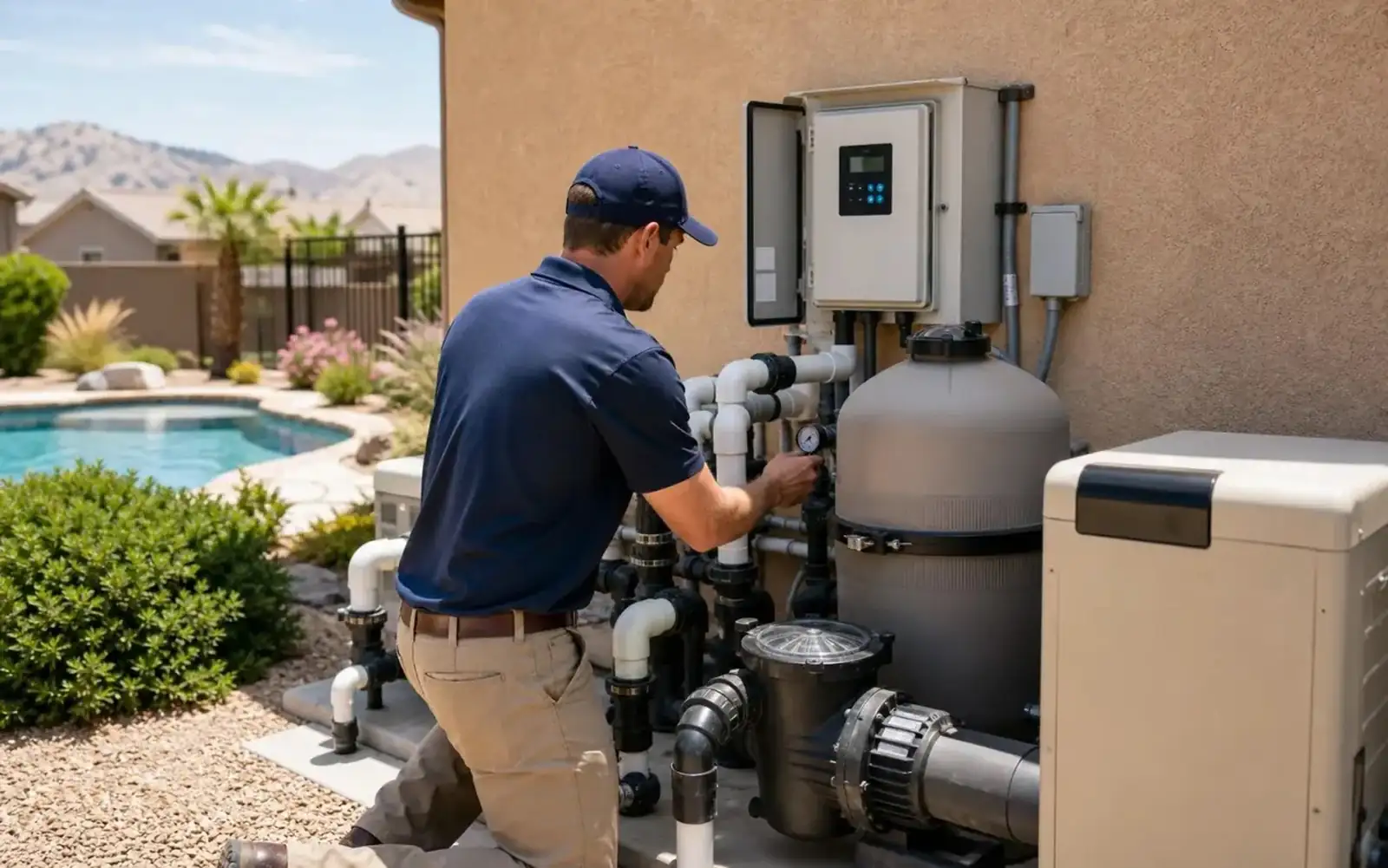
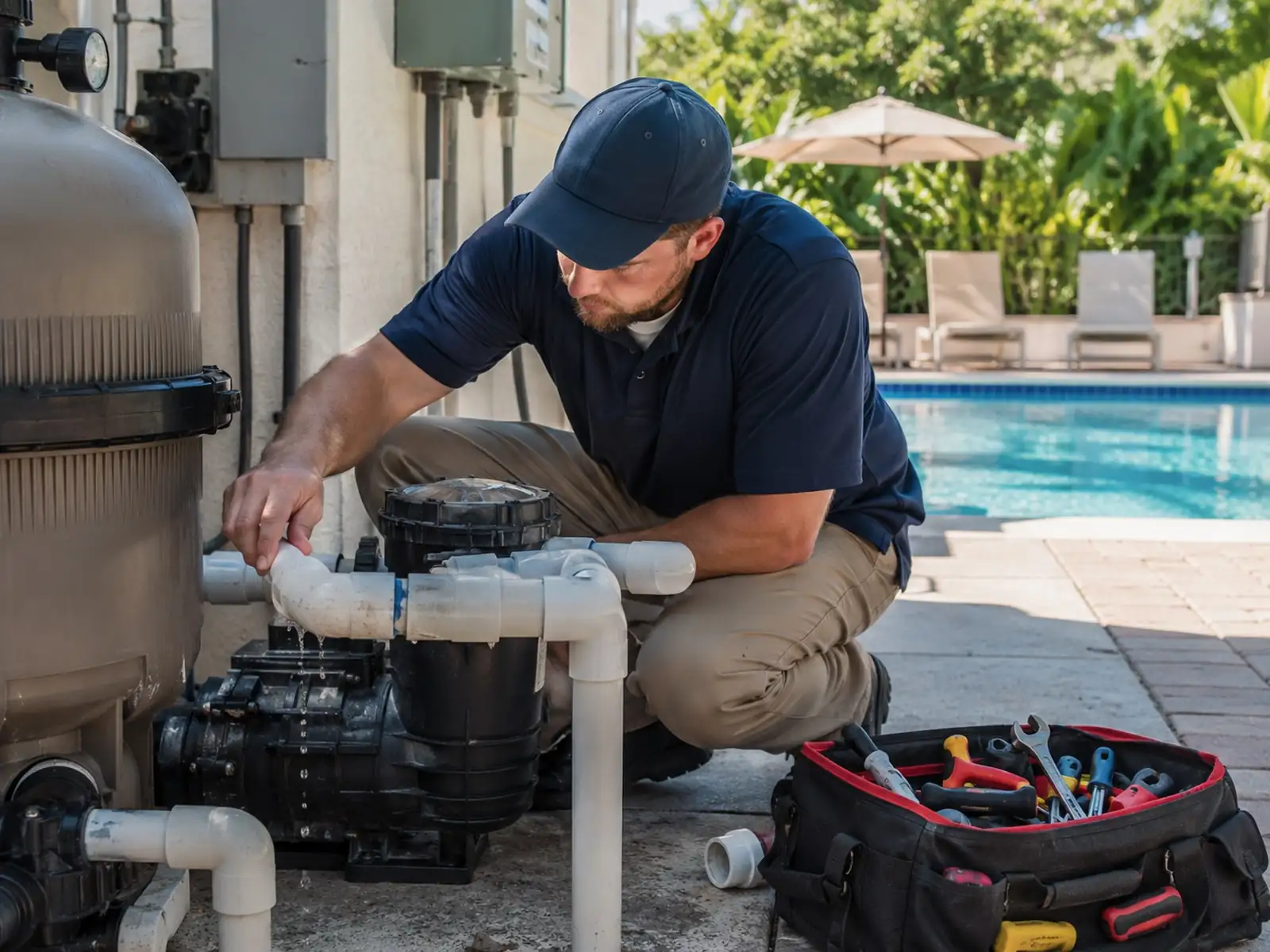
Mesa is the largest city we cover, and the pools in it range from decades-old backyards to brand-new builds. We come to the equipment pad, run the equipment, and find out which part has actually failed before anything is quoted. If the answer turns out to be a tripped breaker or a packed basket, the Pool Problem Finder will often tell you that first.
Older pads and parts availability
Census Bureau figures for 2019 to 2023 put more than half of Mesa's housing as built before 1990, and the 1980s are the single largest decade. Pools from that era are often on a mix of replacement equipment, and some still run a single-speed pump on a mechanical time clock.
With equipment that old, the brand and model matter as much as the fault, because parts availability often decides whether something gets repaired or replaced. A discontinued filter valve or control board can turn a small repair into a replacement. Photograph the data plate before we speak, and we can usually tell you which way it is likely to go.
Two water zones, two hardness figures
The City of Mesa divides its water system into three zones. Its 2025 water quality report gives an average hardness of about 12 grains per gallon in the City Zone, supplied mainly with Salt and Verde River water through the Salt River Project, and 16 grains per gallon in the Eastern and Southern Zones, supplied mainly with Colorado River water through the Central Arizona Project. Any zone can receive groundwater or a blend at times.
Both figures are hard water. In a pool it shows up as:
- Scale on salt cells, which cuts chlorine output and can trigger low-salt warnings in water that tests fine. See salt system repair.
- Scale inside heaters, which shows up as weak heating and overheating faults.
Monsoon season
The National Weather Service notes that thunderstorm gusts in the Southwest almost always exceed 40 mph, and that dust storms arrive as an advancing wall of dust and debris. After a storm, check the skimmer and pump baskets before anything else, then the filter pressure: a sudden rise usually means the filter has loaded with dust and needs cleaning. See pool filter pressure too high.
Storms can also bring down power lines and cut the power. A mechanical time clock stops while the power is out, so the pump schedule can shift by hours without anyone noticing. A digital controller that loses its settings, a pump that won't restart, or a panel that is dark after a storm is worth a call. See pool automation repair.
What we repair in Mesa
- Pool pump repair and variable-speed pump repair
- Pool filter repair
- Salt system repair, including scaled and worn cells
- Pool automation repair and valve and actuator repair
- Equipment-pad plumbing and leak repair
- Heater and heat pump diagnostics
- Pool equipment diagnostics when nobody can tell you what's wrong
Start with the symptom
You don't need to know which part has failed. Tell us what your equipment is doing and we'll narrow it down, including the times you can fix it yourself.
Nearby
Why homeowners call us
You approve the price first
Whether we are diagnosing a fault or doing a job you already know you need, you hear the price before any work starts. Nothing is replaced until you have approved it.
Pool equipment is all we work on
Pumps, motors, filters, salt systems, automation and the plumbing at the pad. The technician who diagnoses it is the one who fixes it.
Upfront pricing
Not sure what's wrong? A $120 diagnostic finds it, and the $120 is credited toward your repair if you go ahead. Many common repairs and installations have a set price instead.
Questions we get asked
How hard is the water in my part of Mesa?
It depends on your zone. The City of Mesa's 2025 water quality report gives an average of about 12 grains per gallon in the City Zone, which is supplied mainly from the Salt and Verde Rivers, and 16 in the Eastern and Southern Zones, which are supplied mainly from the Colorado River. Any zone can receive groundwater at times, which changes the figure. The report has a map showing which zone you are in.
My equipment is from the 1980s or 1990s. Is it worth repairing?
Sometimes, and it is the first thing we work out. With older equipment the deciding question is often whether the part is still made for your model, not how serious the fault is. A photograph of the data plate on the pump, filter or control box helps us answer that before the visit.
What does a visit cost if I don't know what's wrong?
A diagnostic is $120, and it is credited toward your repair if you go ahead. If you already know what you need, many common repairs have a set price, and you hear it before any work starts.
Tell us what it’s doing.
A few questions is usually enough to tell a five-minute fix from a real repair.