
Pool Equipment Diagnostics & System Checks
Pool equipment diagnostics
For when something is clearly wrong and nobody has been able to tell you what. Diagnosis is a service in its own right, not a free preamble to selling a part.
$120 diagnostic, credited toward your repair · set pricing on many common repairs and installations
Why diagnosis is the actual work
Parts are cheap relative to labour and easy to buy. Knowing which one has failed is the hard part, and it is the part that gets skipped.
The failure mode looks like this: a symptom appears, the most likely component gets replaced, the symptom persists, the next component gets replaced. Two visits and two parts later the fault turns out to be a valve. Nobody was dishonest; nobody measured anything either.
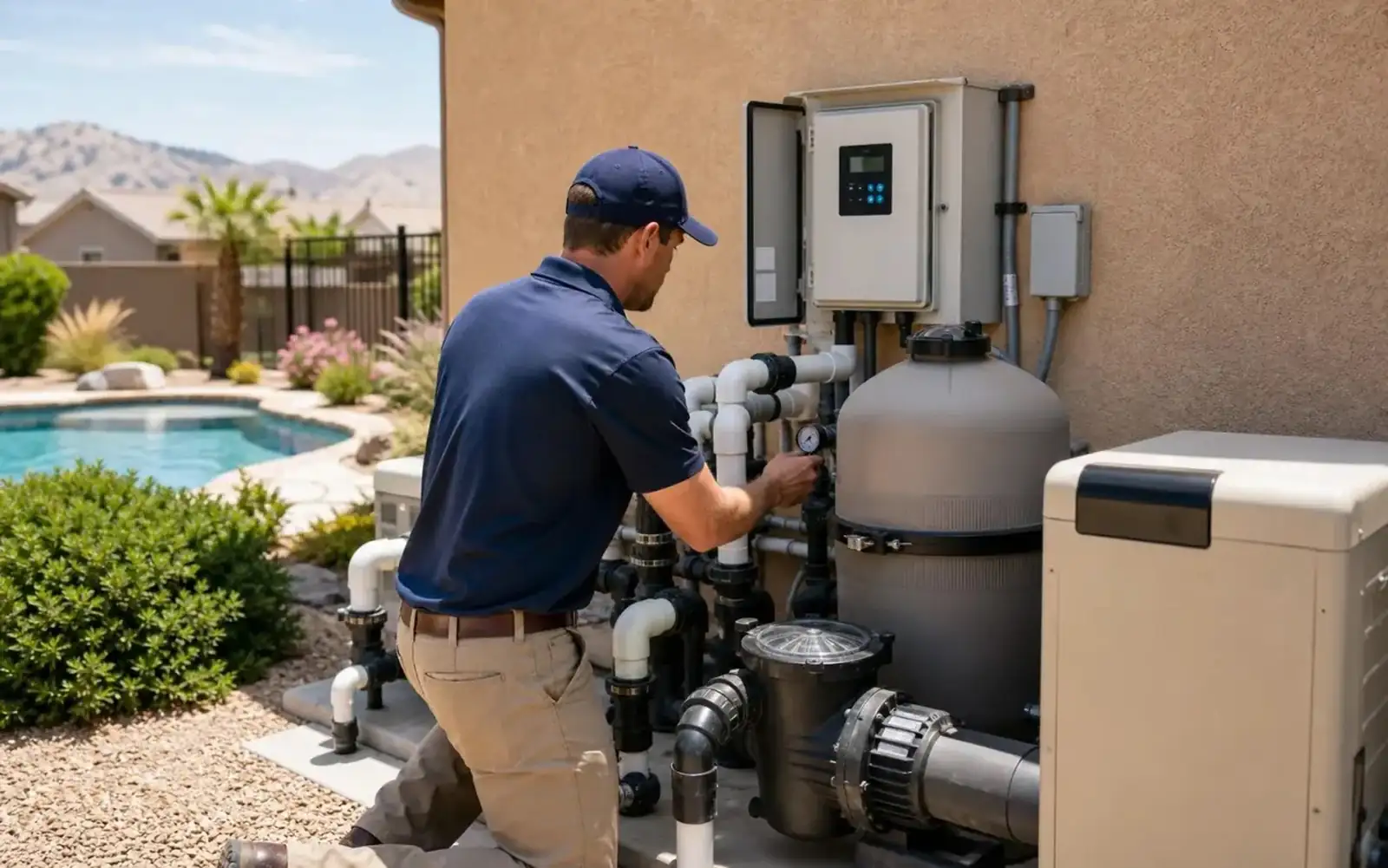
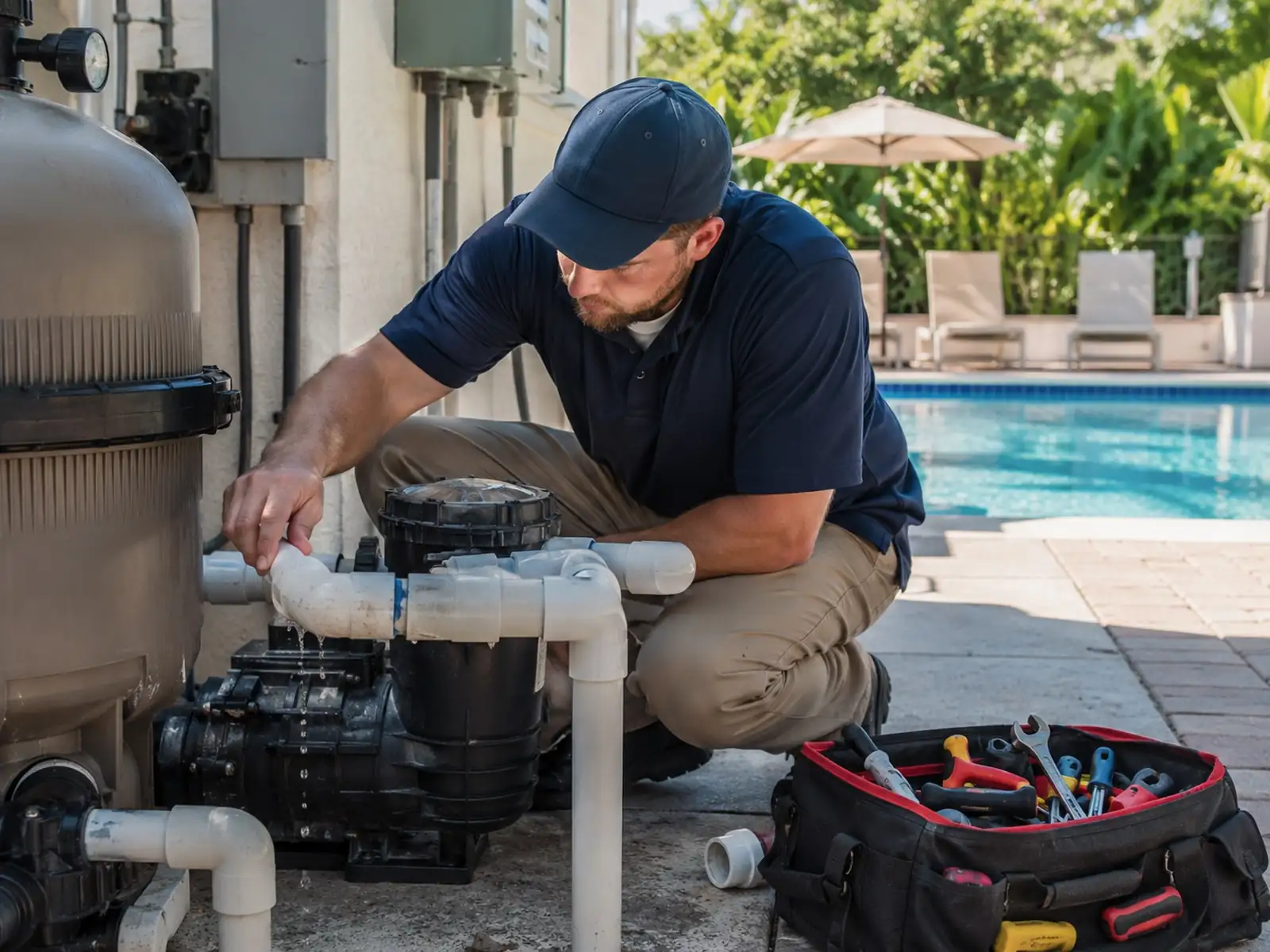
What a diagnostic visit involves
Depending on the symptom, some combination of:
- Electrical measurement — voltage and current at the points that distinguish a control fault from a motor fault, taken under load rather than at rest
- Flow and pressure through the loop — filter pressure against its clean baseline, return flow, suction-side behaviour
- Physical inspection — baskets, impeller, seals, valve positions, visible plumbing
- Reading the equipment's own reporting — codes and status, against the correct documentation for that model rather than a general assumption
- Ruling things out in a deliberate order, cheapest and most likely first
What you get
What we found, what we ruled out, and what we would do about it. If the honest answer is "your equipment is fine and your schedule is wrong," that is the answer.
Before you book one
The Pool Problem Finder resolves a fair number of these for free. It will catch a tripped breaker, a packed basket, a lost schedule, or a lid o-ring before anyone drives out. Genuinely — try it first.
Two things make a real visit dramatically more efficient, and neither needs you to move anything:
- Photos — a close-up of the problem and a wider one showing the surrounding equipment.
- The brand, if there is a name you can read from where you are standing.
New-equipment evaluations
The same visit, run before something fails rather than after.
We look at what is on the pad, how old it is, what has already been replaced, and how it is plumbed and wired together. What you get is a plain description of its condition and what we would expect to need attention first — which is genuinely useful information to have before a failure forces a decision on a weekend.
It is also the starting point for any installation or replacement, because what the pad supports constrains the options more than preference does.
Pool school
Twenty minutes at the end of a visit spent on what your equipment is actually telling you: what the controls do, what normal looks like on your gauges, and what to watch for.
Establishing your filter's clean pressure is the clearest example. Without it a pressure gauge is decoration; with it, it is the most useful diagnostic on the pad for as long as you own the pool.
Related
Pool equipment repair · Pool pump repair · Pool automation repair
Why homeowners call us
You approve the price first
Whether we are diagnosing a fault or doing a job you already know you need, you hear the price before any work starts. Nothing is replaced until you have approved it.
Pool equipment is all we work on
Pumps, motors, filters, salt systems, automation and the plumbing at the pad. The technician who diagnoses it is the one who fixes it.
Upfront pricing
Not sure what's wrong? A $120 diagnostic finds it, and the $120 is credited toward your repair if you go ahead. Many common repairs and installations have a set price instead.
Questions we get asked
What does a diagnostic visit cover?
Measuring the system rather than guessing at it — electrical readings where relevant, flow and pressure through the loop, and physical inspection of the components involved. You get told what we found, including when the answer is that nothing is wrong.
What if you can't find it?
Then we say so, tell you what we ruled out, and what it would take to go further. That's more useful than a confident guess.
Someone already replaced a part and it didn't help. Can you help?
That's a common reason people end up here. A replaced part that didn't fix it is itself information — it rules something out.
Tell us what it’s doing.
A few questions is usually enough to tell a five-minute fix from a real repair.