
Mobile Pool Repair
Why a repair specialist
Cleaning and repair are different businesses that happen to share a customer. The economics of one work against the other.
The economics, plainly
A pool cleaning route works on volume. A technician has a fixed number of stops a day and a fixed amount of time at each. That model is well suited to keeping water clear and chemistry in range, and there is nothing wrong with it.
Equipment repair has the opposite shape. Diagnosis takes as long as it takes. Sometimes it is fifteen minutes; sometimes the fault is a valve three components away from where the symptom appears and it is two hours. There is no way to know in advance, which makes repair work genuinely difficult to slot between two other stops.
So it gets compressed. And when diagnosis gets compressed, the shortcut is always the same: replace the most likely part and see.
What that shortcut costs
The pattern is familiar to anyone who has owned a pool for a while. Weak flow. The pump gets replaced. Weak flow. The filter gets replaced. Weak flow. Eventually someone finds the diverter valve that was turned three months ago.
Nobody in that story was dishonest. Nobody measured anything either.
What we do differently
We only do the repair half — no routes, no chemistry, no weekly plan to sell you. In practice:
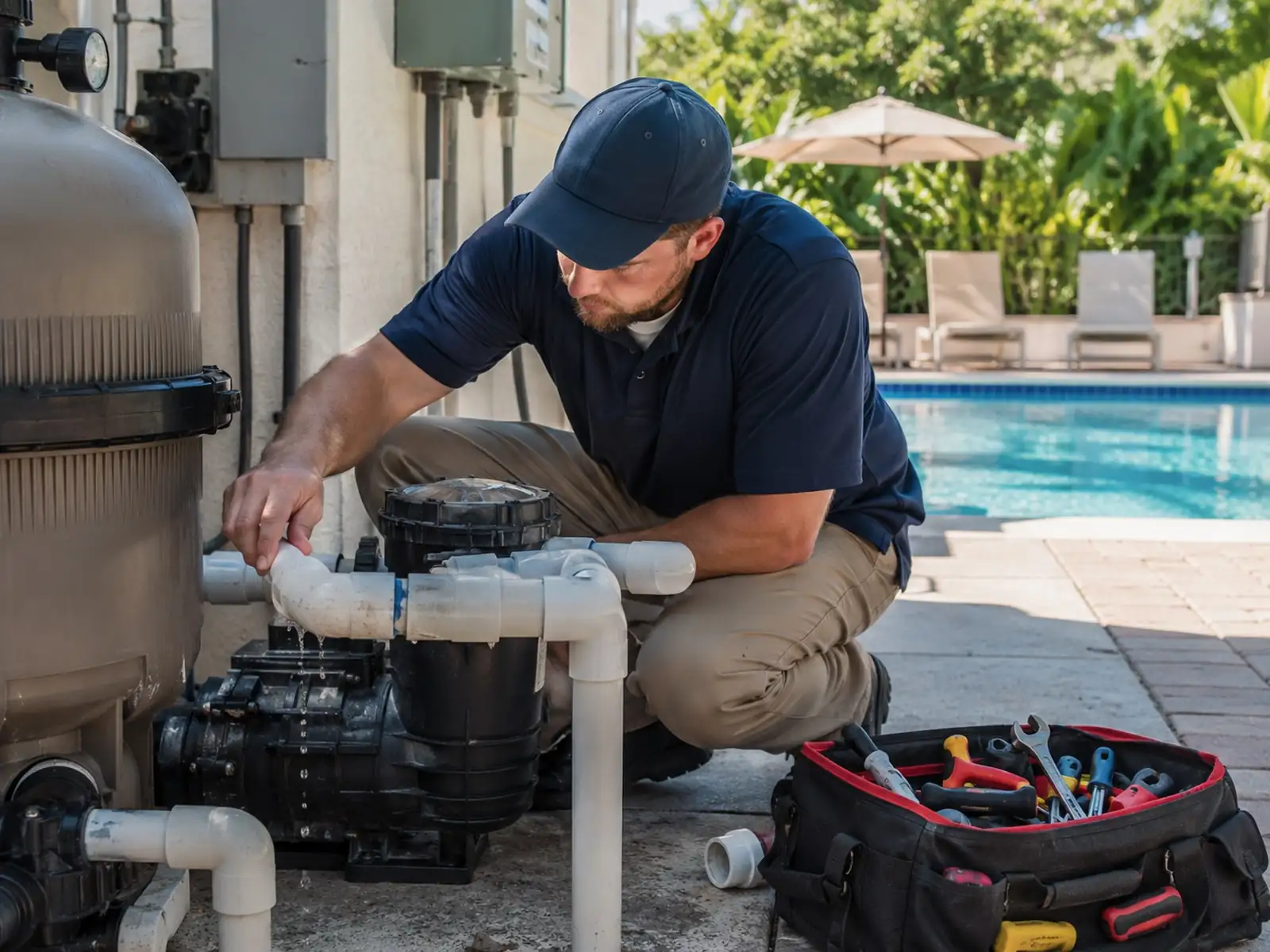
- The truck carries parts, because parts are what the job needs.
- The person who diagnoses is the person who repairs, so nothing is lost in a handoff.
- Diagnosis is the service. It is the thing you are paying for and the thing that decides everything after it.
- You hear the finding either way. Including the visits that end with a breaker that was switched off and a pad that is working perfectly.
What that looks like on the pad
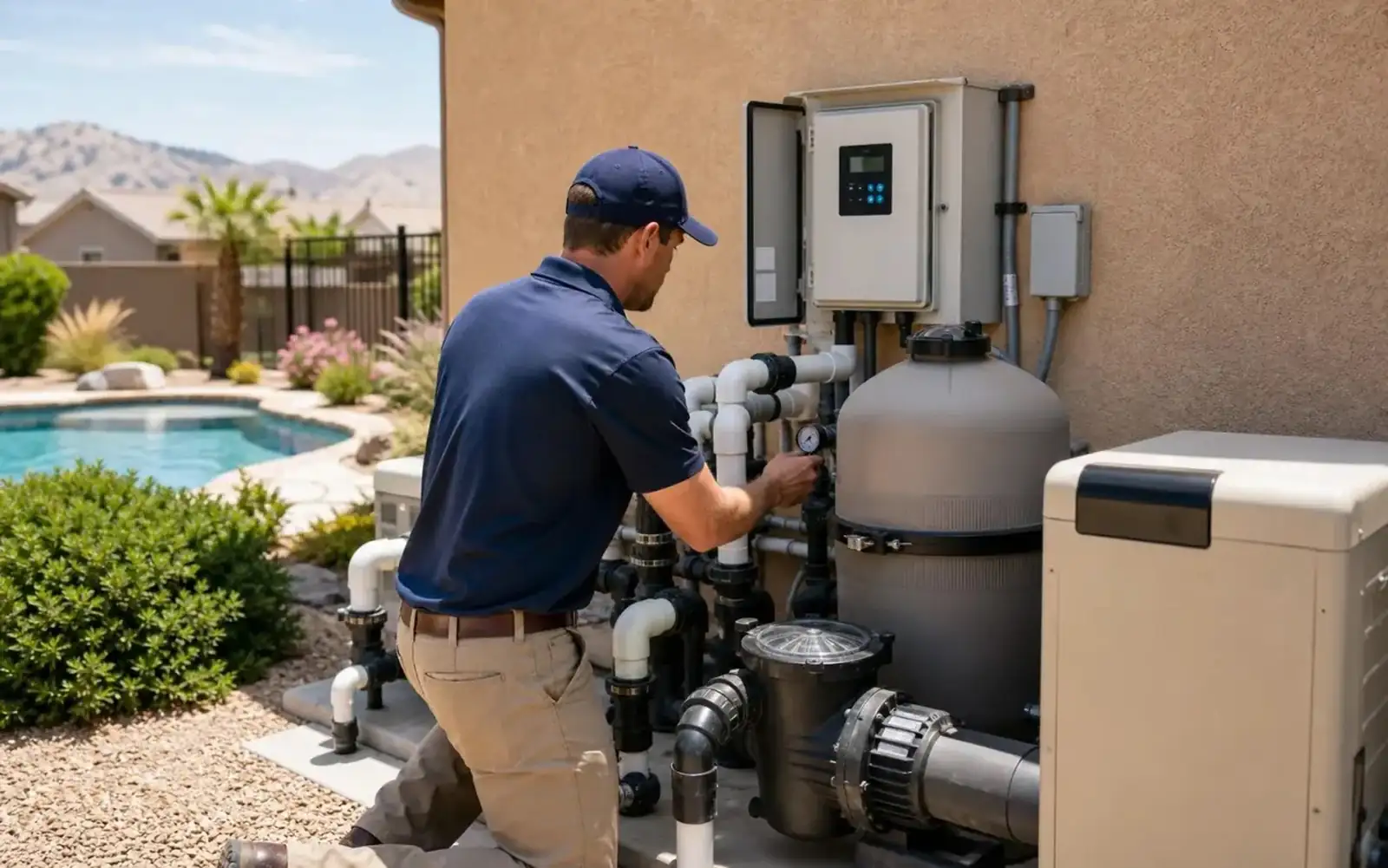
The pad is read as one system rather than as a row of separate appliances, because faults travel along it in the direction the water goes. A heater that will not fire, a salt cell reporting low output and a filter reading a strange pressure are regularly one restriction upstream rather than three faults.
Finding the single cause behind several symptoms is a better outcome than replacing three components, and it is only available to somebody with the time to look for it.
Start with what it is doing
Tell us what your equipment is doing — a few questions, one at a time.
Tell us what it’s doing.
A few questions is usually enough to tell a five-minute fix from a real repair.